Here is a spanish interview I conducted with a peer to simulate what it was like in Belize! These are all the real questions that we asked the patients in spanish. Please forgive my horrible pronunciation it is something I want to work on!
Final Reflection
It is astonishing to me that it feels like just yesterday I was applying to be in this study abroad program and hoping that I would get accepted. This global health and physiology class and Belize study abroad program flew by but I would not have traded a minute of it for anything. The things that I learned about and the experiences I had throughout this program have really started to shape me into the person I want to be.
Before we left for the trip, we spent the majority of our class days learning about different health topics and all of the different health issues around the world. With topics like maternal care and respiratory health, the issues that arise in countries everyday are all issues we should take seriously and work on trying to solve. With all of these health topics being discussed, we had one overarching connection with all of them. What is global health and how is this issue connected to it? At the beginning of the class when we were asked to define it, I defined global health as “All countries, of high and low incomes, coming together to provide resources and research to help obtain the overall goal of health and health equality.” An important aspect of global health that I realized after taking this class is that just because it is a different way of doing something, does not mean it is wrong. That is a major part of what I learned after taking this class and seeing all of the differences in culture. After many reflections on issues in the world discussed in class in addition to witnessing some of this issues myself in Belize, I have realized that my original definition is a good interpretation for me. Health is a universal aspect of life that does not differ amongst countries, societies, or cultures. Everybody gets sick and everybody needs help to get better. This makes the issue of health equality even more important to me because I think that is a vital part of global health. No matter the race, gender, religious beliefs, etc., we still all get sick and all need help to get better. And as humans, I think we should all feel obligated to help one another.
No matter what part people play, whether it is big or small, everybody has a role in global health. Looking back on this entire experience, I have realized that I want my role in global health to be bigger than it was before I started this journey. I definitely spent many hours a week volunteering for the hospital and places of that nature but after going abroad I realized that there can be a much bigger difference being made outside of the US. While there are still many issues to be faced in the US, I personally want my role to be helping the people in other countries who I think need it more. I would love the opportunity after I graduate to be able to be apart of a program that helps people all across the world such as the peace core. This trip has really opened my eyes to the possibilities of what you can do with you life and how you can add so much more meaning to it. I think that being on this trip made me feel like I was actually “living”. I was doing something in my life and it was actually making a difference. Whether it was a small or big difference to that person, it was huge for me.
Some of the biggest challenges I saw during my trip were the lack of access to so many things. Especially in the some of the villages that were extremely secluded, I continuously thought about where they could go if they needed a doctor or needed really anything that was not down the road. The lack of hospitals, medical clinics, speciality doctors, and even roads made it seem that getting medical help was not an option whether you needed it or not. Having a car in Belize was a huge luxury and most people I saw either had bikes or just walked. It was hard for me to imagine that people would walk or bike more than a few miles to get to see a doctor. In our class, we talked about how accessibility was a huge contributor in slowing the progression of global health and after this trip, I could see why. This issue as whole is a major problem that stops so many people from getting the help that they need in a timely manner.
A solution to this problem is an easy idea but not as easy to implement right away. The solution would be to create more hospitals and clinics, find more doctors, and fix the roads to be able to get there. The problem is all of these aspects are connected to each other and you need every aspect to be improved if you want to see improvements. I think that Belize is headed in the right direction and working on trying to improve the infrastructure and accessibility to healthcare. This problem is one that relies heavily on the government wanted to make a change and putting in the time and money to change that. Unfortunately for us, what the government wants to do is out of our control. The progress is slow but as years pass it will eventually improve and overall health in Belize will thrive because of it.
If I could go back again I would definitely have done a few things differently. My biggest regret is not talking to the doctors more than I would have liked to. I wish I had sat down with them and done an interview with them because I think what they are doing in Belize is fascinating and I would have loved to learn more about all of them. I only got to work with the other two doctors the very last open clinic day and I really enjoyed both of them. I wish I had gotten to meet them more and talk to them more as well. Another thing I wish I had done differently is write more than I did. I started off my trip journaling every single day, but throughout it, I slowly wrote less and less and eventually stopped altogether. Although the memories I have and the lessons I learned will stay with me forever, I wish I had written more to be able to cherish the small details of the trip that I believe will fade with time. The days that I did write I have gone back multiple times to read and it gives me the ability to distinctly remember how I felt in some of those exact moments that I wrote about. I would not trade those feelings for anything.
There were so many lasting impacts that were made while I was on this trip. I was able to make new friends, learn new things, and see new things I never had before. The positive attitude that people had and the joy they had for anything and everything is something that will leave an impression on me for the rest of my life. Just like the buildings and homes they live in, these people are bright, colorful, and radiate positivity no matter the circumstances. This experience just made my future career goals feel concrete. I want to meet new people with different personalities and experiences for the rest of my life. I want to be able to get to know these people, learn new things from them, and be able to help them with what they need. By becoming a doctor, I will be able to do what I love for the rest of my life, and I personally cannot wait!
A Little Piece of Paradise
One of my absolute favorite parts about Belize was the beautiful and bright colors everywhere you went. Whether it was a house, a community center, a bank, or even a hospital, everything was bright pinks, oranges, and blues. It made me feel so happy everyday to walk outside and see all the wonderful colors everywhere. It reminded me that everything is always so happy in Belize, no matter the day or the circumstances. The last day of our trip, we went to an island called Caye Caulker. It was one of my favorite days because we got to go snorkeling and see a bunch of different animals that I had never seen before. Just like in Belize, Caye Caulker was bright and colorful everywhere you went! This picture I found reminded me of the island almost exactly. My roommates and I went and found a little restaurant that was on the water and looked exactly like the huts in this picture do! This picture reminded me of the great last day I had and the memories that I will cherish forever. 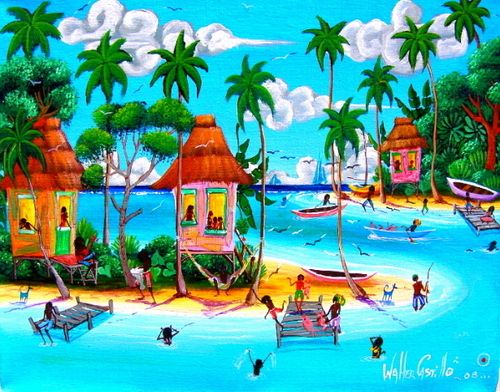
By contemporary artist, Debbie Cooper: A painting of Caye Caulker
A Wordsearch!
I created a word search about hygiene for the kids I met in Belize. I made it in Spanish, so that they would all be able to do it. Although they teach English and Spanish to the kids, I felt that mostly everybody felt more comfortable with speaking Spanish. I learned that you can get kids enthusiastic and excited about pretty much anything, even good hygiene! When we went to the school to talk about proper teeth brushing and hand washing, the kids were overjoyed about us coming and teaching them a new song we had come up with. It was so much fun to be able to interact with the children, whether it be for medical reasons or just to play. The kids were by far my favorite part! Here is a link to be able to see my word search in Spanish!
A Day in the Life
A day that I spent in Belize was drastically different than a day I spent in America. In Belize, I would wake up at 7 am to get my day started and immediately be getting ready to go eat breakfast and go out into a village to be setting up the clinic for that day. In America, the day I took pictures of was a day that all I had to do that day was babysit. I woke up significantly later, around 10:30, made breakfast for myself and picked up the little boy. I spent majority of my day laying out by the pool. Afterwards, I went and got dinner with my friends and hung out with them. Throughout the day, I got to find myself watching a lot of Netflix, especially my favorite show friends! Overall my day in America was pretty relaxing and fun. Although I did not mind, I definitely felt more useful and productive in Belize. This helped me realize that I am a lot lazier in America than I was in Belize. During my trip, I got up early and at the same time everyday, did a bunch of activities throughout the day, ate dinner and basically went to sleep right after to do it all over again. It was very routine. In America and especially during the summer, my life is not as routine or nearly as productive. I have realized that I enjoy both and should work on balancing the two more in the future. No matter the country I am in though, having friends and spending time with them is something that is extremely important to me and I value deeply! I have to have my friends wherever I go!
One thing that was similar is I eat out way too much! I really want to try to work on making more food for myself.
A typical day for me in Belize would look like this……


A typical day for me in America would look like this…


A Song about Hygiene

During one of our days in Belize, we were able to the attend a school in the village. We were told that we would be going into the classrooms at the school and giving a short presentation on proper hand washing and teeth brushing. As simple of an idea as this seemed to us, we were sure that there were some children who might not have been taught how to do this. We were instructed to come up with something creative for the kids when talking about these proper hygiene methods, so my group and I decided to make up a song for the kids to sing when they were brushing their teeth. The song went like this:
“ Brush your teeth round and round,
Brush your teeth all around,
Brush your teeth in between,
Brush your teeth nice and clean!’
All of the kids were singing it with us and we had so much fun! We got to give them all toothbrushes, toothpaste, and floss in a little goodie bag afterwards which made the experience even more rewarding. On community day a few days later, I had a little girl come up to me that I had recognized in the classroom that day and she said to me, “Hi I remember the song you taught us and now I sing it when I brush my teeth!” That was the best feeling to me that she enjoyed what we had taught her and had actually learned something from it too!
Belize Animals Vs. US


The animals that everybody had in Belize were wildly different than the ones we had in America. One family had an animal called a “squash”, which is a relative of a raccoon and they had it chained up to a tree as if it were a normal pet like a dog! For me, this was something that surprised me. I had been expecting to see dogs and cats, which I did see many of but I was surprised by the wide variety of animals that people had that I had either never heard of or would never imagine keeping as a pet. One child I met had found a baby squirrel in a tree one day and took out of the tree and had kept it as his pet for years. There were goats, lizards, and squashes, oh my!
It was also different for me to see almost every single animal in Belize to not be neutered or spayed. In the United States, it seems to be that everyone gets their dogs or cats “fixed”, but in Belize, this is not the case. The only reason I see this to be a potentially bad thing is just the general overpopulation of animals that cannot be taken care of. It makes sense though considering that procedure would cost money that many families would not be able to afford.
About
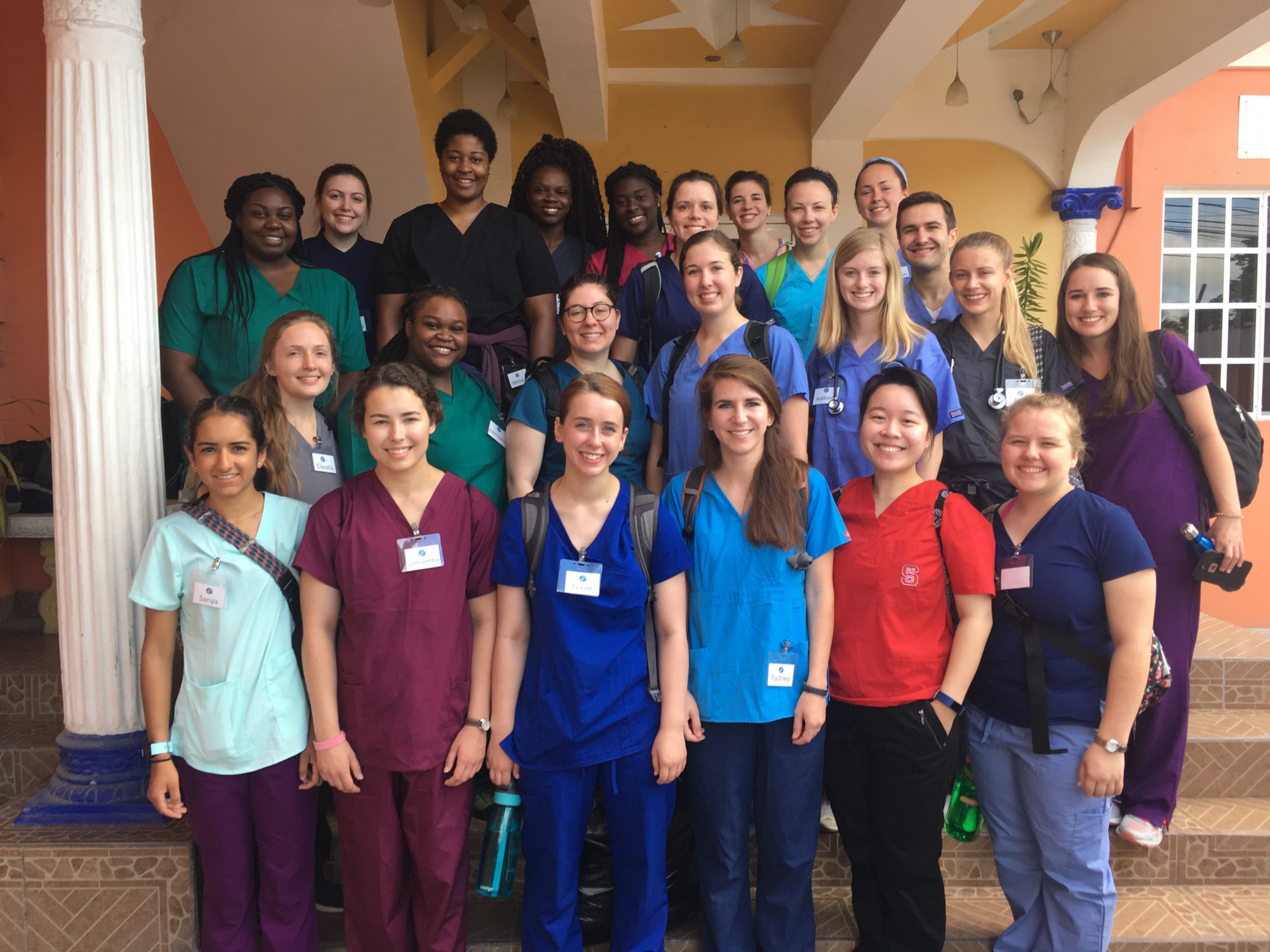
My name is Addison Diehl and I am currently a rising senior at North Carolina State University majoring in Human Biology. I traveled to Belize this summer for a medical service study abroad trip and I created this website to help be able to show all of things I learned on this trip and the overall wonderful experience I had. I would like to thank Dr. Overman for a wonderful class experience. I throughly enjoyed her class and all of the different things we learned about! I would also like to thank the the International Service Learning Team in Belize for making our transition into Belize culture so easy and inviting. The trip would not have been such a positive experience without them! I hope you enjoy!
 I am the one on the left!!
Post Trip Reflection Questions
What’s an example (or story) of something you’ve seen in Belize that connects with something we discussed in class?
Westernization is a real life issue and it is progressing more and more throughout the years. Even in some of the very underdeveloped towns in Belize that we visited there were so many signs of westernization that was impacting their culture. In an example as simple as Coca-Cola, these signs were everywhere! I mean everywhere. No matter if the town was big or small, developed or underdeveloped, people could not escape from these American companies intruding on their own country and culture. I do not believe in Westernization of all countries and that just because there are ways that work for us does not mean they need to work for all countries throughout the world. I think a big problem with westernization is that these developed countries always think that they are right, about everything. Because of this, we think that everybody would want to and should be like us. When I visited Belize, the things I enjoyed the most of Belizean culture was how they were not like us. I truly cherished the things I learned and the experiences I had that I would never be able to have in America.
How has this experience influenced your future career goals? (Confirmed, shifted, clarified, etc.)
This experience definitely confirmed my future career goals. Almost all of my life I have wanted to be a doctor, specifically a pediatric doctor. The time I spent in Belize and at the clinics helped me to confirm that this is what I wanted to do for the rest of my life. I have always loved being around kids and to have them around me and in the clinics was such a joyful experience to have. It was like when a kid entered the clinic or was there during a house visit, my whole body lit up and I was so excited to play with them. It was also very confirming for me to have other people come up to me to tell me that they thought I was really good with kids and that is was so obvious that I was passionate about medicine and children together. Every day we spent on this trip just made me more excited for the future to come and that I too one day could be a doctor like the ones we worked with in Belize.


What are the global health initiatives or priorities of Belize that you’ve witnessed while here?
Maternal Health was a health initiative that I saw Belize took a lot of priority in trying to improve. When we went to the hospital, there were so many posters about how to properly breastfeed your child as well as the importance of breastfeeding after birth. It was apparent that Belize saw this initiative as high priority. Dr. Overman was telling us that there is a beautiful statue in Corozal, Belize of a woman breastfeeding her child. ALthough we were not able to see it because we never went to Corozal, it confirmed our ideas that maternal health is something they take very seriously in Belize. Although there were not any statues in Orange Walk that I saw, there were still so many posters and paintings that were all throughout the district. I was really happy to see how much effort the country had been putting into this movement and how much the statistics in maternal health were improving because of it!
Another priority I witnessed in Belize was drinking clean and purified water. Like the breastfeeding posters, there was a lot of advertising of drinking the “Crystal” purified water. When we went to the house visits, almost all of the houses we went to said that they buy the purified water jugs and use that as their water source. I was also really happy to see that so many of these families were avoiding the drinking water that could be contaminated with worms and sticking to the purified water regimen. There were hardly any people that came through the clinics that got diagnosed with worms so it is apparent that drinking the purified water is really improving their overall health.
What level of impact to do feel you are making in your service communities?
When I arrived to Belize, I really thought that we are going to be making a big difference by coming in, setting up these free clinics, and trying to help the people. Throughout the trip and especially on clinic days, I sometimes felt hopeless that we were not making as much of an impact in these communities as I originally thought we were going to be. It was really hard for me to see patients that were in so much chronic pain and the doctors only give them a 15 day supply of Ibuprofen or give a woman with anemia a 30 day supply of iron pills. It was hard for me to comprehend how it was okay to only be helping these people for 15 or 30 days max. Were they just supposed to be going back to how it was before when the 30 days were up? How was that helpful? Another difficult thing about this trip was when a patient would come in and the doctor could not definitively diagnose the patient and would suggest for them to go to the hospital to get blood work done, get an X-ray, etc. It was upsetting to me that I would not be able to know that when that patient left the clinic whether he or she would go to the hospital to get the additional tests done or if they even had a way to get there? The unknown of some of those patients was really hard for me. After expressing some of these frustrations, my roommate during the trip showed me the importance and value to us being there. She helped me to understand that even if we only gave someone vitamins or we even just made them laugh or smile, we were making a difference. That was a really helpful aspect of the trip that I held onto. Overall, I don’t think that our two-week trip to Belize was life changing, but I do believe that what we did when we were there mattered, and for that, I am happy and grateful that we went.
What challenges did you observe in Belize that can/may hamper global health efforts? How, why?
One thing I noticed during my trip was the lack of infrastructure when it came to the roads you had to travel in Belize. At no point during my entire trip did I see one stop light or stop sign or anything. The only thing I observed were speed bumps you would go over in the roads periodically to try to prevent people from speeding. Overall, the driving situation felt more like a “free for all” then it felt safe. There were many giant potholes we had to go over and sugar cane debris filled the roads at all times, no matter where we went. This made me question whether or not Belize had many deaths or hospitalizations due to driving accidents. We talked about how driving accidents are a major contributor to deaths in a lot of developing countries in our class, and I could not help but think about it the entire time we were on the trip.

Another challenge I noticed during this trip was lack of speciality doctors or higher trained doctors than the ones we worked with. The doctors we worked with on our trip went straight to medical school from high school and spent 6 years there to become a general practitioner. One of the doctors was telling me that majority of the people who become doctors do not do anymore specific training after that to have a speciality because they usually want to start practicing medicine immediately. I found this to be a good thing in the sense that there were many doctors who had a well-rounded knowledge of many things, but I also found it to be a challenge. Since there were not many doctors that are highly trained in one specific speciality, if a patient presented with symptoms that were “out of the normal range” for the general practitioners, how would they be properly diagnosed? This is an issue I see slowly diminishing throughout the next 20 years since Belize’s health care system is really starting to improve but as of right now, there is a huge lack in speciality doctors and a dire need for them.

What has been challenging for you in this experience? How did you handle this experience?
The most challenging part of this experience for me was enduring the heat. Although it may be obvious to all that it was of course “hot” and a silly thing to have as such a challenge, for me, being in the heat becomes debilitating for me. I am extremely sensitive to hot temperatures and have suffered from many heat strokes before. So for me, being in such a hot environment was the part of the trip that I was worried about the most. Nevertheless, I did not want to let that stop me from being in this amazing program and experiencing all that I came to learn. Every morning I would drink an entire water bottle during breakfast along with taking some electrolyte replenishers. Throughout the day I would drink multiple water bottles as well as bring some gatorades. My goal was to stay as hydrated and cool as possible. The house visit days were much harder to accomplish these goals due to us being outside in the sun and heat majority of the day. There were a few days where I got really bad headaches and felt nauseous from the dehydration and heat. Although I had a low grade headache for the majority of the trip, the pros of this trip made it easy to ignore the headache and just continue to take it all in and learn everything that I could.
If you could steal a part of culture to bring home, what would it be?
I would steal everyone’s positive attitudes and love for everything. The people that I met in Belize had this radiant energy about themselves that made me wish people in America were like. It was crazy to me that some of these families had gone through the toughest of times and barely had a roof over their heads but still they smiled and acted as if they still had the world. I think many people in the US take for granted what we have and the luxuries we get without even noticing. During community day, we fed all of the children there lunch but we had been given a prepackaged lunch. We all got a few cucumbers and carrots in our boxes and I asked the little girl I was playing with if she wanted mine. You would have thought I had just given the little girl a brand new barbie doll the way she lit up with excitement. It was an amazing and eye-opening experience to be able to interact with people who are gracious and appreciative with anything that they are given, even if it’s just a smile and a wave hello.


Proposal
Leishmaniasis in South Sudan
Statement of Intent
Visceral Leishmaniasis is the third most prevalent vector-borne disease behind malaria and lymphatic filariasis. This potentially fatal disease has over 200,000 new cases each year and is growing rapidly in East African countries, specifically in South Sudan. This epidemic is a rapidly growing problem that could easily be prevented but due to forced migration patterns of people have not been regularly exposed to the illness, new cases are presented every year. With a proper treatment, prevention, and eradication plan, we can stop this illness from prevailing.
The Problem
Leishmaniasis
Leishmaniasis is a disease that is caused by a parasitic protozoa of the genus Leishmania. There are over 20 different species of this protozoa that can all have the same effect to a human. Humans can contract this disease through a vector known as a sandfly. The reservoir this protozoa usually resides in is a rodent or a dog. The human contracts the disease from the vector through biological transmission. Leishmaniasis is known as a zoonotic disease, which means it is able to transmit disease from animal to human. Leishmaniasis has a special characteristic though that allows it to also be anthroponotic, which allows the disease to transmit from person to person just through the vector [3]. Though there are multiple types of leishmaniasis, visceral leishmaniasis is the most virulent and fatal form of the disease. This form of the disease, also referred to as VL (visceral leishmaniasis), attacks vital internal organs such as the liver, spleen, and bone marrow [3]. The incubation period for this form is usually a few weeks to a month, but due to its possible asymptomatic presentation, it can be difficult to to properly diagnose [3]. A way that an asymptomatic person can start to present symptoms is they get co-infected with another disease, such as HIV/AIDS, become immunocompromised, and start to show symptoms of both diseases. Some common symptoms of VL is fever, weight loss, swelling of spleen and liver, and a low blood count. Advanced stages of VL are typically called “kala-azar,” which is Hindi for black fever [3].
The Center of Disease Control states that Leishmaniasis is found in over 90 countries and a range of 200,000 to 400,000 new cases of VL are reported each year. This disease is considered a neglected tropical disease, which means it causes illness to over one billion people and usually circulates in poor, rural communities where there is not a means to treat and prevent the disease, trapping these people in a never ending cycle. The diagnosis of this disease requires lab testing, where they are able to identify the disease and the specific species of sandfly. For VL, you can also take a bone marrow sample to view under the microscope for examination of the parasite [1]. Since bone marrow samples are difficult to extract and extremely invasive and painful for the patient, that is not the most suitable choice to identify this disease. A blood test can be done for VL to test for antibodies produced in response to the development of the disease, which is a test that is much simpler for countries that do not have an immense amount of resources [1]. Effective intramuscular injection therapies for the disease are used to treat the patient, but if the patient does not get treated for VL, it is usually fatal in most cases.
South Sudan
East Africa is a hot spot for new cases of VL. Approximately 90% of all cases occur in East Africa [6]. As of 2015, South Sudan has approximately 12,340,000 people residing in its country and 16% of this population is at risk for contracting VL[1]. South Sudan has a particularly high number of cases that should spark the attention of people who have put in great efforts to eradicate the disease. In 2015, the World Health Organization reported that South Sudan had 3,747 cases of VL that year, and of those cases, 114 of them resulted in death [1]. In 2014 though, there were over 8000 new cases of VL, so this data shows that the numbers of new cases is already decreasing dramatically. Even with this sharp decrease of new cases, South Sudan still has a high number of new cases compared to other countries that have already almost eradicated the disease. Women and children are mostly affected by this disease [1].
South Sudan’s health care system is split up into three tiers: Primary Care Units, Primary Care Centers, and Hospitals. There are currently six hospitals that are spread out over South Sudan. The primary level of care provides a basic health service is funded by the government and provides free and accessible health to the majority of the population [9].
A reason for this high number of cases could be due to the fact that sandflies live in the Acacia forest that rests on Sudan’s border, affecting Sudan and the surrounding countries [2]. Another reason that a high number of cases resides in this country is large amount of people that migrate to South Sudan do to a long-standing civil war that has forced citizens to move to neighboring countries and allowed over 1.5 million refugees to be placed there [2]. Due to this high volume of migrates that travel to parts of South Sudan that are endemic for VL and have no immunity for the disease, epidemics reoccur in this country constantly and stop the progression of treatment and eradication of the disease. Ethnicity is also considered to be a risk factor for the disease and it has been found that Sudanese tribal people are highly susceptible to contracting the disease [1].
Goal Statement
Due to the increasingly high number of cases of visceral Leishmaniasis in South Sudan that is impacting the mortality rate and overall health of the country because of the high quantity of migrates into the country, we propose an accelerated treatment plan of cases already reported and an intense prevention plan to stop new cases from arising, in hopes of eradication of Visceral Leishmaniasis in South Sudan.
Proposal
Treatment
To be able to diagnosis and treat a vast quantity of people in South Sudan, we need a fast, easy, and yet effective treatment plan. Studies showed that in Bangladesh, a diagnostic test called rK39 immunochromatographic dipstick test is able to give fast and correct results in approximately 20 minutes [4]. In addition, there is also a direct agglutination test which is deemed to be highly effective in a study done by Alonso Soto [6]. The direct agglutination test has already been proven to be more effective and sensitive in Sudan, and therefore should be utilized as well [6]. Although the agglutination test is slightly more accurate and sensitive compared to the rK39 dipstick test, it is more expensive and not as easy to use. Therefore, we propose to implement both of these diagnostic tests into South Sudan in our clinics all over the area. By having both serological diagnostic tests readily available, we can diagnose patients that present more obvious symptoms of VL with the dipstick test and save the agglutination tests for patients that do not present as many apparent symptoms. By using this method, we can accurately diagnose more patients. We hope to partner with Bio-Rad Laboratories and that they will donate an extensive amount of dipstick and agglutination tests for us to use in South Sudan when we first start.
We are aware that if people have to travel too far to come to a clinic, they will not come at all, so it is crucial for us to build a few smaller mobile clinics in the area. By utilizing mobile clinics, we can save money and reach the most people in the country. These clinics will have everything needed to combat VL. We will be traveling from village to village and treating them as we go. By using an app we have created called “LEISH-It”, we will be able to notify a community health care worker in that area that our mobile clinic will be coming to the village within 48 hours. This allows time for the village people to be notified of our arrival, and we can treat the maximum number of patients when we arrive. Really serious cases of VL will transported to a nearby primary care center by vans we will have that will travel with our mobile clinics.
Once properly diagnosed, we will immediately start treating them with the effective medication called liposomal amphotericin B (LAB). A study shows that this LAB treatment is highly effective, even for HIV patients [7]. The downside to this treatment is that it is expensive. Although the cost of this medication is higher than other treatments, it is the only current medication on the market that does not produce toxicities as a side effect, which we decided was extremely important in attempting to the preserve the daily lives of the South Sudanese people. The medication is administered through an IV infusion that has shown impressive results in treating people with VL. Recent studies have shown results that a single dose of LAB has been very effective in treating patients; the studies have shown that there is a 96% initial cure rate and a 90% cure rate over 6 months [7]. Certified nurses and technicians working in the mobile clinic will be administering 10 mg/kg of the medication at a single time. Afterwards, the patient will be monitored for a few hours to make sure no complications or adverse side effects arise but then will be free to leave. This is another reason we wanted to utilize this LAB treatment because it is extremely practical for us to administer a one-time dosage rather than having the patient come back for multiple treatment and potentially increasing the risk of nonadherence. Since a main reservoir for this disease is partially treated patients, it is crucial that we eliminate that reservoir by implementing a highly effective treatment. The cost of using LAB is estimated to be around $872 per person [7]. Although is this highly expensive treatment and would only normally be accessible in resource rich countries, there is an American pharmaceutical company called Gilead Sciences that sells this medication. In eradicating this disease in Bangladesh, the World Health Organization partnered with this company, and they donated a multitude of vials of the LAB treatment [4]. We contacted the World Health Organization to see if they would donate to our clinics in South Sudan as well since they received so much recognition and praise for donating to the cause in Bangladesh. This past month, they generously agreed to donate 500,000 vials of the medication to help with our efforts of eliminating this disease. Since we will only need one vial per person due to the dosage, this donation will be able to help treat patients that were only partially treated as well as new cases of VL that arise.
While the patients are being treated and monitored for side effects, we will have the community health workers be educating the patients on how to prevent contracting this disease as well as spreading it. This will help us to spread the word about prevention of VL to each village we travel to and allow us to use successfully treated patients as testimonials. The more people that are knowledgeable of the disease and know that there is a free treatment readily available, the faster we can eradicate this disease.
Prevention
While treating the current cases of VL, we will concurrently be implementing an effective prevention plan to help combat the spread of the disease and new cases that may arise. A successful prevention method that can be implemented into all of the villages is the use of sandfly killer sprays [4]. This vector control method has been proved to be effective in killing majority of the sandflies that roam the villages. Since rural areas and refugee camps are areas that are more prominent with VL cases, we will focus our time there. We also have a vast amount of sandflies that proliferate in the Acacia forest near the country and have had trouble eradicating this disease due to this. We will need to focus our attention in that area. Trying to eliminate all of the sandflies in the forest is not a feasible route to take, but we could set up perimeters around the forest that kept the flies contained in that area rather than letting the vector traveling to the villages.
In addition, bed nets will be provided to all families that come to the clinic. We will be working with a company called PermaNet, that is willing to donate 200,000 bed nets to help with this cause. We will be giving them to the patients that come to our clinic. The bed nets will be doused with insecticides to help further the elimination of the fly as well as other disease carrying vectors. We plan to have the community health workers traveling with us to give them out in addition to educating each family on how to use the net and other ways that the family can prevent VL. This prevention method has proved well in other countries such as India and had decreased the number of cases by 59% from the bed nets alone [5].
Our main area of concern will be the refugee camps in South Sudan. Since refugees are the main source of preventing the elimination of this disease, we will have to spend a majority of our time in those camps properly treating, educating, and preventing the spread of disease. We will be working with the refugee camp health authorities to set up our clinics in these camps to start treatments and vector control. Instead of trying to provide the refugee camps with bed nets, we will be spraying the sandfly insecticides throughout the camps every six months to try to eliminate the vector in each refugee camp area. This method have been proven to be effective in refugee camps in Somalia so we will utilize this method as well [8].
The prevention of VL will need to be a community effort. Campaigns will need to be done to bring awareness of our efforts and utilizing the community health workers will help increase our ability to educate the people in the community of how to avoid contracting this deadly disease. Signs and symptoms will be put on display so that the people will be aware of what to look for if they have contracted the disease and will be instructed to visit a nearby clinic immediately to receive a diagnostic test and treatment plan. If the community has a complete understanding of this disease and how to prevent it, our chances of success will be much greater.
Eradication
Although eradication of a disease is not necessarily an accurate term to describe this effort due to its sheer difficultness to achieve that, we can certainly try to eliminate the disease by means of having it under control. Dr. Robert Killick-Kendrick states that in order to “eliminate” a disease it needs to have five factors that are successful: peace, government involvement, finance, solid control methods, and public health education [5]. Eradication of the this deadly illness will require early detection and treatment, effective vector control methods, and the immense cooperation of the government and community to come together to see the importance of solving this problem. We are utilizing a multitude of resources to try to combat this disease. If all goes as planned, our time line is treat all current cases of VL and utilize prevention methods within five years; after that we estimate our supplies to run out due to data we have collected from other eradication studies of VL in other countries [4].
Education
Education will be a key aspect in eliminating this disease from South Sudan. We will need to teach families about the importance of utilizing prevention methods and going to get treated immediately if symptoms start to show. When people come to our clinic to receive treatment or be given an insecticide-impregnated bed net, we will be explaining to them our ongoing efforts to eliminate this disease. We will be teaching them how to use the bed nets as well as other easy prevention methods that could help them avoid being bitten. We will also be educating them on the symptoms of the disease and teaching them on what to look out for if they are infected. We hope that after being treated, survivors of the disease will provide testimonial to their local village to show that treatment is now simple and attainable. This should help to encourage members of the village to not let it go untreated if infected.
Government/Policy
We will need full cooperation of the government if our plan is to succeed and remain sustainable. We will be teaming up with WHO to be able to talk to South Sudan’s president and establish a network between us and their government. We will be showing the president our statistics of VL and our plan of eradication. Since South Sudan is one of the only countries currently to still have high number of VL cases, it should be important for the government to want to eradicate this disease. Assuming we receive full cooperation, we will ask the government to allow us to work with their Primary Care Centers. These primary care centers provides a Basic Package of Health Services, which is mainly funded by the government so that they are free of charge to the population [9]. This package of health services includes curative treatments, prevention, as well as health promotions. These centers will be where we send the severe cases of VL to be treated. Throughout our five year plan, we will be updated the government on our reports and statistics that we have collected to show them about the improvements that have been made. After our five-year timeline is up, we will be needing the government allow the Primary Care Centers and Hospitals to continue the treatment for new cases that emerge and vector control. If all goes as planned, cases of VL will have decreased to only a few per year, making it extremely manageable for the government to allocate for treatment and prevention. According to the World Health Organization, the South Sudan government already provides other methods of treatments for VL that are not considered as effective as the method we chose, but still would work given a low number of cases per year [1].
Funding
We are working almost entirely off generous donations from large companies in America that have already agreed to donate. Majority of the community health workers we will be working with are volunteers as well. Through our planning, we have estimated that our current donations will last five years. After our donations run out, most of the funding will be needed from the government to continue our efforts. We are hopeful that it will be much more easy to manage after those five years and the government will not be spending large amounts of money to fight this disease at that point.
Sustainability
We will be relying heavily on the government to help keep this project sustainable. Donations do not last forever so we needed to make sure there was funding available after the donations ran out. Since the government already provides funding to their health care centers for treatment, prevention, and education of diseases in their country, it will already be part of the government’s funding plan to provide the necessary resources to help continue the eradication of VL. Given that the government agrees to our eradication plan, it will be expected of them to continue the treatment and prevention plan on a lower scale than when we first arrive.
Limitations/Challenges
If the government is not willing to cooperate and continue to fund the project after our donations have run out, it will be extremely difficult to keep the eradication of this disease at bay. We will need the full support of the government if we are going to have a shot at eliminating VL entirely.
For South Sudan, the major issue with eliminating this disease is the ongoing civil war in the country that is forcing migration and therefore, increasing the number of cases of VL in the country. If these migrations do not stop, VL will continue to thrive in a country where it very easily could be contained. The lack of peace in the country is a main reason for the continous high number of new cases compared to other countries who have made great strides in eliminating the disease. The education of the disease should help further eradication, but if the people are not willing to work together with our team to fight this, improvements will not be made.
Since our relief project is working almost solely off donations, if we have not been able to significantly reduce the number of cases after our donations run out, we will not have properly eradicated this disease and be able to leave it up to the government to continue our efforts. This project will only remain effective and sustainable if we can reduce the hundreds of thousands of cases South Sudan currently has and reduce it to less than a hundred cases per year.
Conclusion
Visceral Leishmaniasis is a neglected tropical disease that is still highly prevalent in South Sudan due to many risk factors that hinder its ability to be eliminated. Thorough studies in many other countries around the world have shown that VL can be eradicated if the proper steps are taken to eliminate it. Early detection and treatment in addition to effective prevention methods have shown impressive results in decreasing the number of cases of VL in a short amount of time. Through the utilization of donations from many companies and the cooperation of the South Sudanese government, we have the ability to eradicate VL in South Sudan as well.
References
- South Sudan. (2017, December 07). Retrieved May 30, 2018, from http://www.who.int/leishmaniasis/burden/Leishmaniasis_South_Sudan/en/
- Al-Salem, W., Herricks, J. R., & Hotez, P. J. (2016, August 22). A review of visceral leishmaniasis during the conflict in South Sudan and the consequences for East African countries. Retrieved May 30, 2018, from https://parasitesandvectors.biomedcentral.com/articles/10.1186/s13071-016-1743-7
- Parasites – Leishmaniasis. (2017, August 21). Retrieved May 30, 2018, from https://www.cdc.gov/parasites/leishmaniasis/health_professionals/index.html
- World Health Organization. (2018). Community-driven programme is key to defeating visceral leishmaniasis in Bangladesh. [online] Available at: http://www.who.int/leishmaniasis/news/Defeating_visceral_leishmaniasis_in_Bangladesh/en/ [Accessed 31 May 2018].
- Education is key to controlling visceral leishmaniasis. (2010). Bulletin of the World Health Organization, [online] 88(1), pp.11-12. Available at: http://www.who.int/bulletin/volumes/88/1/10-040110/en/ [Accessed 1 Jun. 2018].
- Chappuis, F., Rijal, S., Soto, A., Menten, J., & Boelaert, M. (2006). A meta-analysis of the diagnostic performance of the direct agglutination test and rK39 dipstick for visceral leishmaniasis. Bmj, 333(7571), 723. doi:10.1136/bmj.38917.503056.7c
- Moore, E. M., & Lockwood, D. N. (2010). Treatment of Visceral Leishmaniasis. Retrieved June 21, 2018, from https://www.ncbi.nlm.nih.gov/pmc/articles/PMC2889655/
- Visceral Leishmaniasis (Kala-Azar) Outbreak in Somali Refugees and Kenyan Shepherds, Kenya – Volume 7, Number 7-June 2001 – Emerging Infectious Disease journal – CDC. (2012, April 27). Retrieved June 21, 2018, from https://wwwnc.cdc.gov/eid/article/7/7/01-7746_article
9. Health in South Sudan. (2018, June 19). Retrieved June 21, 2018, from https://en.wikipedia.org/wiki/Health_in_South_Sudan

